Artemia Enrichment Protocols: Maximizing EPA/DHA Omega-3 for Marine Larval Survival
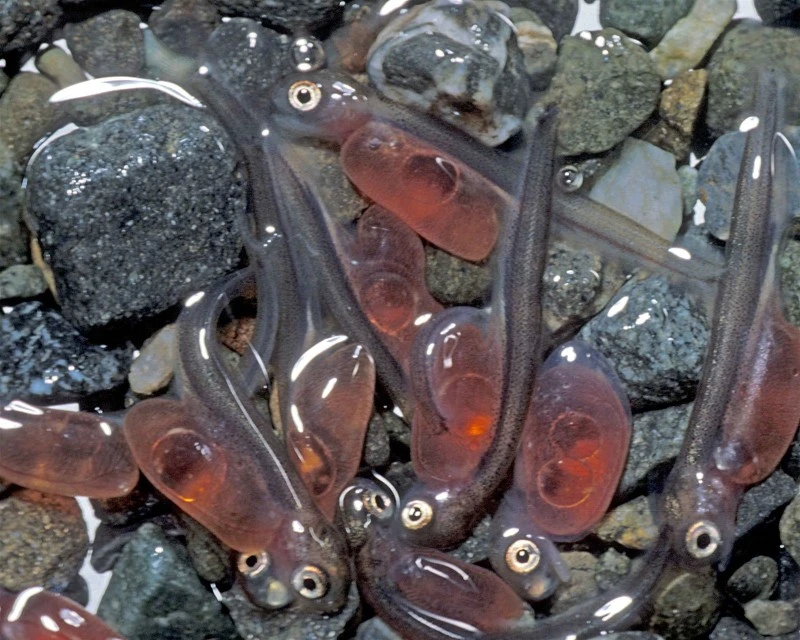
Newly hatched Artemia (Instar I) are inherently deficient in essential HUFA - particularly EPA (20:5n-3) and DHA (22:6n-3) - because they do not feed during early development and rely on residual yolk reserves. For marine fish larvae such as grouper, seaperch and snapper, this nutritional gap directly correlates with increased malformation rates, reduced metamorphosis success and elevated mortality during the critical first-feeding window.
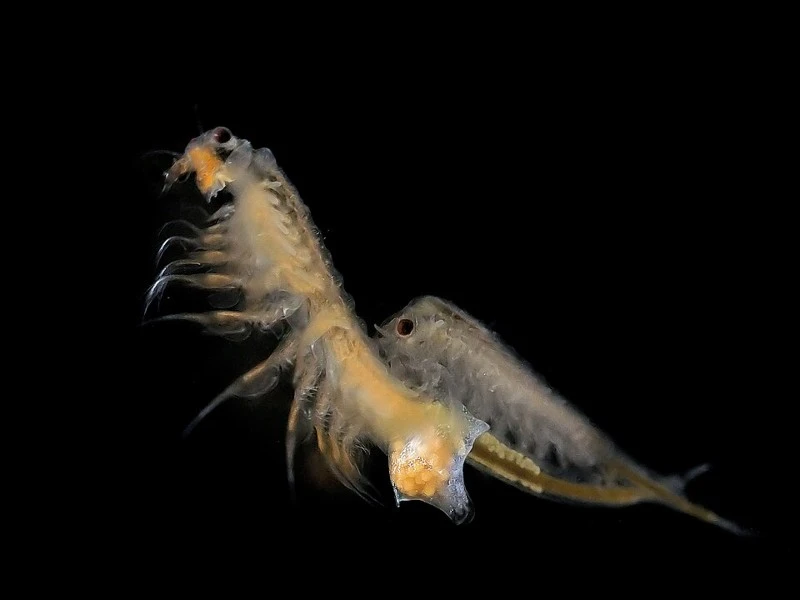
Enrichment protocols bridge this gap by introducing formulated HUFA emulsions into the Artemia culture medium, allowing Instar II–III nauplii to bioaccumulate EPA/DHA before being fed to larvae. A controlled enrichment protocol - defined by emulsion dosage, temperature, dissolved oxygen, duration and harvest timing - can increase Artemia HUFA content from <1% to >4% of total lipid within 12–24 hours.
Marine fish larvae cannot synthesize EPA and DHA at rates sufficient to meet metabolic demand during rapid growth. The table below compares representative biochemical profiles of un-enriched Artemia and Artemia enriched with a commercial HUFA emulsion under standard hatchery conditions.
| Parameter | Un-enriched Artemia (Instar I–II) | HUFA-Enriched Artemia (Instar II–III) | Analytical Significance |
|---|---|---|---|
| Total lipid (% dry weight) | 18–22% | 22–28% | Energy density for larval metabolism |
| EPA (20:5n-3, % total fatty acids) | 2–5% | 12–18% | Precursor for eicosanoids, cell membrane function |
| DHA (22:6n-3, % total fatty acids) | <0.5–1% | 8–14% | Neural and retinal development |
| ARA (20:4n-6, % total fatty acids) | 1–3% | 2–5% | Eicosanoid balance, stress response |
| Total HUFA (% total fatty acids) | 4–9% | 22–37% | Core enrichment performance indicator |
| EPA/DHA ratio | Variable, often DHA-deficient | Typically 1.2–1.8:1 | Species-specific requirement |
| Larval malformation rate (reference) | Baseline, elevated | Reduced by 30–50% in controlled trials | Clinical outcome metric |
Common Problem
-
How long should Artemia be enriched before feeding to marine larvae?
A 12–24 hour enrichment period is standard for Instar II–III Artemia. Shorter periods may not achieve target HUFA levels; longer periods increase bacterial load and HUFA catabolism.
-
Can over-enrichment cause water quality problems in larval tanks?
Can over-enrichment cause water quality problems in larval tanks? Yes. Excessive enrichment media residue can increase ammonia, bacterial load and surface film in larval tanks. Rinse enriched nauplii with clean seawater before feeding.
-
What documentation should a supplier provide for HUFA enriched brine shrimp?
Request a batch-specific COA covering total lipid, EPA, DHA, ARA and total HUFA, plus enrichment media composition and microbiological limits.
30-50% reduction in larval
malformation rate with HUFA enrichment
Published hatchery trials and commercial production data consistently show that HUFA-enriched Artemia improves larval performance compared with un-enriched Artemia. For grouper (Epinephelus spp.), metamorphosis success rises from 35–50% on un-enriched Artemia to 65–80% on HUFA-enriched Artemia under standard larval density in 30-day trials. For seaperch (Lates calcarifer), survival to juvenile increases from 20–35% to 50–70% in 21-day trials using a 24-hour enrichment protocol.
For snapper (Lutjanus spp.), malformation rate drops from 25–40% to 10–18% in 30-day EPA/DHA-enriched trials. General marine larvae also show improved salinity and temperature stress tolerance when enrichment exceeds 18 hours. These data are indicative and vary with species, larval batch quality, water quality, feeding regime and hatchery management. Buyers should request species-specific trial data from the enrichment media supplier where available. For hatchery enrichment feed solutions, see hatchery enrichment feed solutions.
Step 1-2: Tank preparation and enrichment media dosing
Enrichment is a time-critical, oxygen-sensitive process. Prepare the enrichment tank with filtered seawater at salinity 28–32 ppt and temperature 26-28°C. Stock nauplii at 100-200 nauplii/mL. Maintain continuous, moderate aeration - sufficient to keep nauplii suspended without damaging fragile Instar II bodies - and keep dissolved oxygen above 5 mg/L throughout, since enrichment emulsions are oxygen-demanding. A typical range is 0.1-0.3 g enrichment emulsion per liter of culture water, split into 2-3 doses over the enrichment period.
Step 3-4: Monitoring, harvest and post-enrichment handling
Monitor dissolved oxygen and ammonia at each dosing point. At 0 h add the first emulsion dose and confirm DO >5 mg/L and temperature 26-28°C. At 6 h add the second dose and check DO >5 mg/L with NH₃ <0.5 mg/L. At 12 h add the third dose if running a 24-hour protocol. Harvest nauplii at 18-24 h, when EPA/DHA peaks before catabolism begins, and rinse with clean seawater. Do not extend beyond 24 h - HUFA catabolism and bacterial load increase, and over-enrichment reduces net gain.
Rinse enriched nauplii with clean, UV-treated seawater to remove residual emulsion and bacteria. Feed immediately or store at 4-8°C for short periods under 6 hours with aeration. Do not re-enrich previously enriched Artemia, because HUFA catabolism reduces net gain. Record the complete protocol - salinity, temperature, nauplii density, emulsion dosage, dosing intervals, DO readings and harvest time - so that each batch can be traced against larval performance data.