

An industrialised vannamei shrimp farming model in China
Originating in Fuqing, Fujian, and distributed across Putian, Zhangzhou, Dongshan, Pingtan, and other locations, the number of small shrimp farms in operation or under construction in Fujian Province has reached nearly 40,000. Fuqing not only boasts the largest concentration of farms but is also a core area for Zhejiang farmers acquiring land and building farms in the north.
Since 2023, Fuqing's shrimp farms have entered a period of rapid expansion; 2025 saw a surge, with at least 10,000 new farms added. Demand for buying and renting farms surged, driving up rents and pushing land resources to near their limit.
Notably, this model, based on winter shrimp farming, has created a profit model distinct from Jiangsu and Guangdong: no boilers are needed in winter, resulting in farming costs 4-6 yuan/kg lower than in Jiangsu; lower water and air temperatures allow for continuous feeding in the later stages of farming, making it easier to raise large-sized shrimp; and proximity to the Yangtze River Delta, Pearl River Delta, and Central China's main sales areas allows for off-peak market entry, resulting in a significant price advantage.
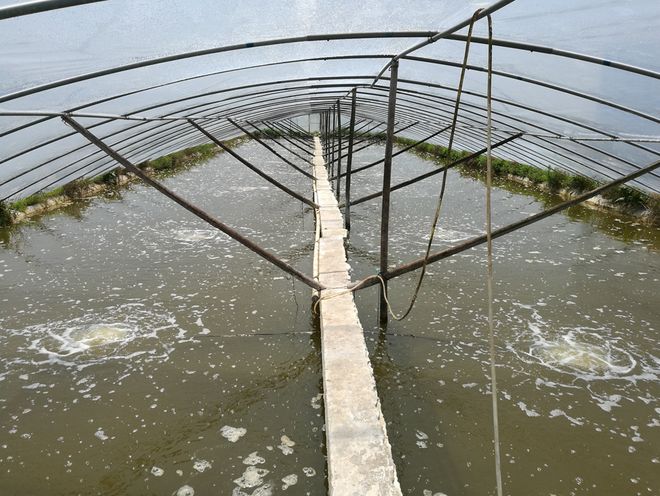
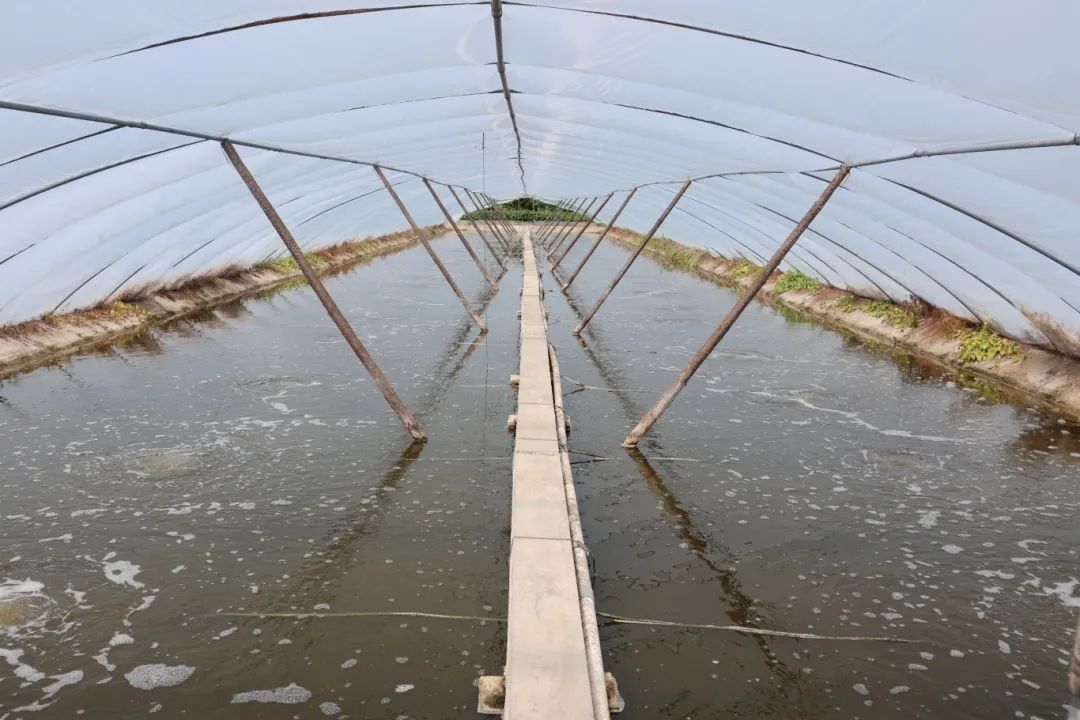
Fujian's small-scale shrimp farming is mainly concentrated in Fuzhou (Fuqing), Putian, Zhangzhou, Dongshan, and Pingtan, with nearly 40,000 small-scale shrimp farms in operation or under construction.
Fuqing is the origin of Fujian's small-scale shrimp farming and also the most concentrated area, with approximately 30,000 farms currently in operation or under construction. It is projected that over 20,000 farms will be operational by the second half of 2026, mainly concentrated in Yuxi Town, Sanshan Town, Longtian Town, and Jiangyin Town. The Fuzhou Nanhu Ecological Park in Yuxi Town is one of the representative clusters in the area.
Putian represents the second tier of Fujian's small-scale shrimp farming, with approximately 5,000 to 6,000 farms distributed in Xiuyu District and Xianyou County.
Facility upgrades: Moving towards greenhouse yields of over 2,000 kilos
In the past two years, the small-scale aquaculture farms in Fuqing have also undergone renovation and upgrades.
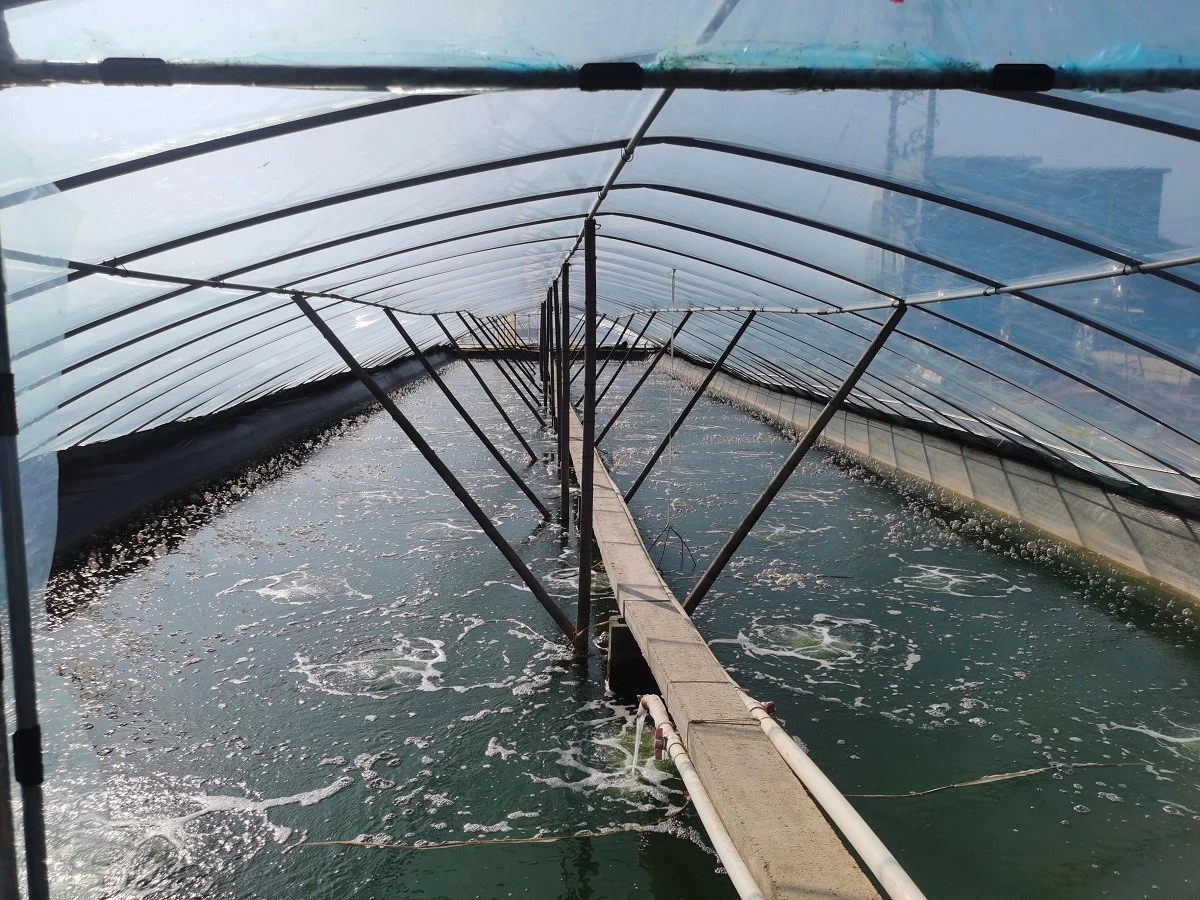
Previously, the actual water level in the farms was only 70-80 cm. Farmers are now raising the water level to 1-1.2 meters by increasing the height of the pond walls or deepening the pond bottom, preparing for a future yield of over 2000 kg per farm.
The aeration system is also being upgraded. Initially, each farm was equipped with only 50 air heads; now this number is gradually increasing to 70-80 air heads, and the fan power has been upgraded from 45 kW to 55 kW or even 75 kW. At the same time, each farm is equipped with two high-speed fans, one for operation and one as a backup, and an additional emergency generator is provided to prevent losses due to power outages.
By the second half of 2026, one-third of the farmers will have installed feeding machines, mainly rail-mounted feeding machines. Some farmers in certain parks are using steel pipe suspended rail feeding machines, with each machine costing only 2800-3000 yuan.
The trend shows that shrimp farming in Fuqing is evolving from labor-intensive to facility-based, automated, high-oxygen, and deep-water operations. This is not only necessary to increase yield per unit area, but also crucial for coping with extreme weather, reducing labor costs, and stabilizing success rates.
Strictest food safety regulations become the threshold for the park
Fujian is one of the regions with the strictest food safety controls in China.
Shrimp sold in the market must undergo rigorous drug residue testing and be certified as qualified before being allowed to enter the market. The use of any prohibited drugs is strictly prohibited during the aquaculture process. The local Ministry of Agriculture and Rural Affairs regularly sends personnel to the parks for random inspections, conducting sampling tests at least 1-2 times per week.
Currently, the management of aquaculture drug use is included in the scope of the Food Safety Law. Violations of prohibited drugs will face strict legal consequences. Most parks have significantly increased their management of animal health drugs compared to the past.
According to Zhang Jianfeng, Dingfeng Aquatic Products, as a leading enterprise in Fuzhou, has been issued a Food Safety Certificate by the local Ministry of Agriculture and Rural Affairs, requiring each aquaculture farmer to sign a guarantee against the use of prohibited drugs. Only animal health products from reputable large manufacturers are allowed in the park. All animal health manufacturers entering the park must sign a responsibility contract with the park. If any problems arise with the animal health products, the merchant will bear full responsibility. Animal health manufacturers that have not signed a contract are not allowed to enter the park.
This means that food safety is no longer simply a compliance cost, but a threshold and a brand requirement for park operation. The future competition among small-scale shrimp farmers in Fujian will not only be a battle of production volume and cost, but also a systemic competition involving seedlings, feed, animal health, traceability, and channel access.
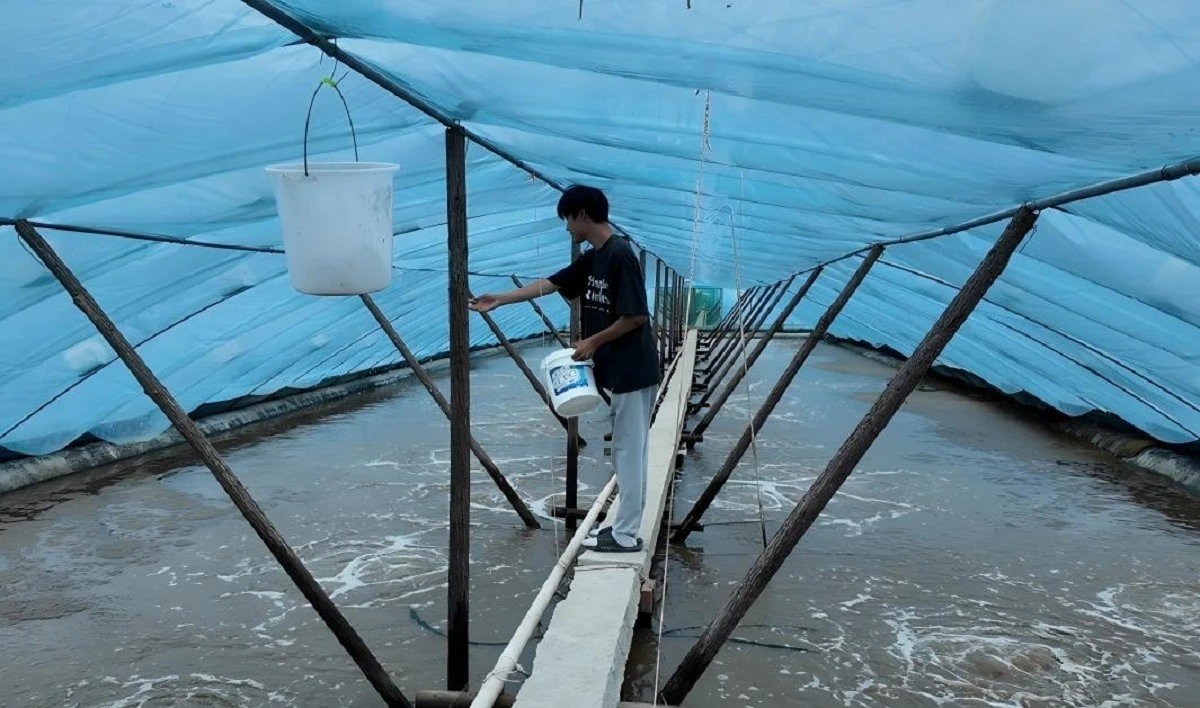
greenhouses represent the future of shrimp farming in China
Acknowledging that China is still the world's leading aquaculture producer with around 54 million metric tons (MT) of output annually, Micciche pointed out that shrimp and prawns currently account for just 5 percent of this volume – at between 2.5 million MT and 2.7 million MT.
Shrimp cultivation began in China around 1980, and its growth received a boost after the commercial introduction of Pacific white shrimp (Litopenaeus vannamei) in 1996. Shortly thereafter, the government strongly promoted the production of this species from 1998 on, with the sector seeing consistent growth until its current rough patch."
From 1998, vannamei production moved from 100,000 MT to almost 800,000 MT in 2003. After that, the growth rate averaged around 5.2 percent from 2004 to 2020, although this fluctuated between 2011 and 2014 due to early mortality syndrome. But lately, during the last four years, there's been a slowdown with just a 1 percent increase in growth, essentially due to Covid and economic issues," Micciche said.
Today, vannamei accounts for 93 percent of China's shrimp production, followed by black tiger shrimp (Penaeus monodon) at 5 percent and kuruma shrimp (Marsupenaeus japonicus) at 2 percent. Vanammei and kuruma volumes are increasing at around 1 percent annually, and monodon by 2 percent.