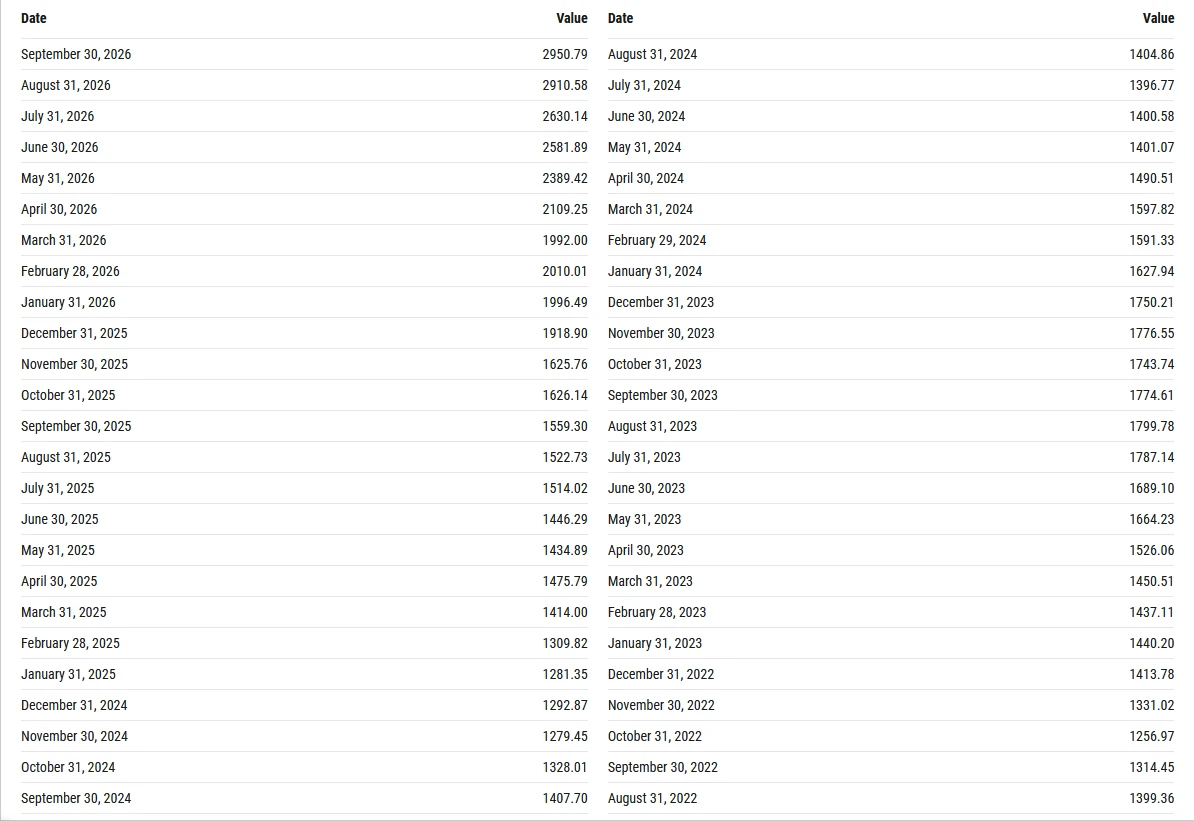
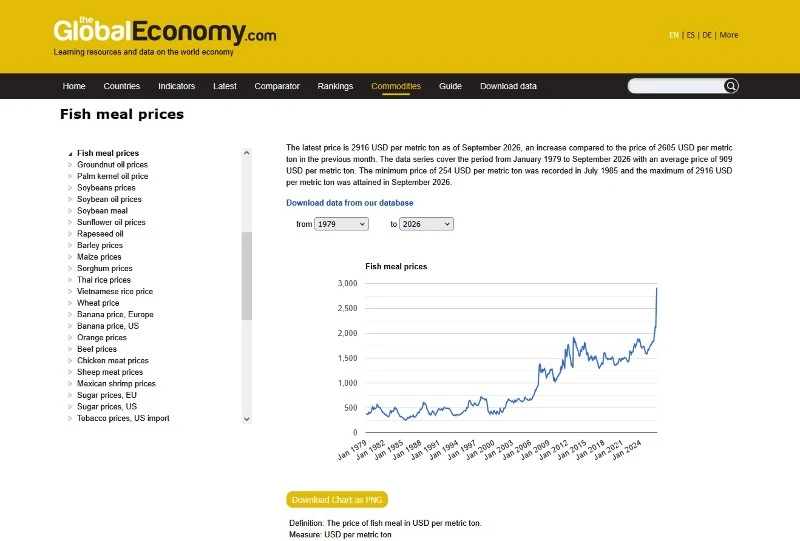
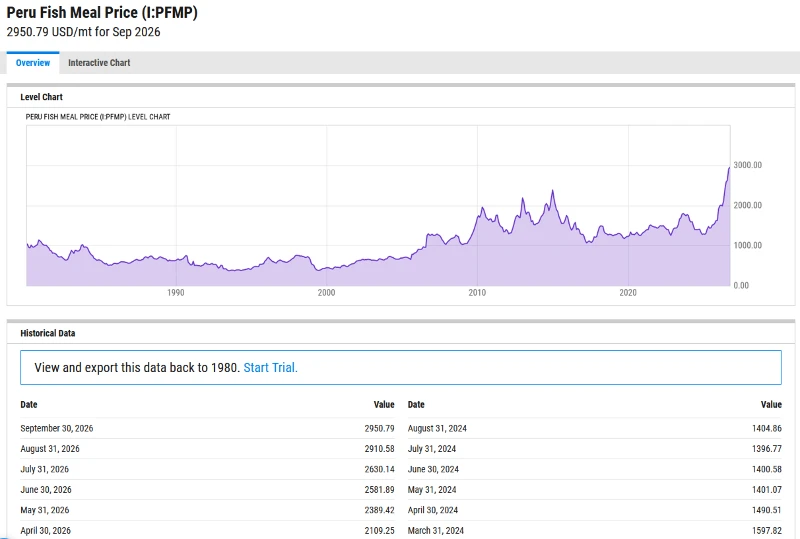
This year, the agricultural industry is bound to be booming. Previously, wheat, corn, rubber, and sugar all experienced pretty good upward cycles, and now, fishmeal has exploded too. Peruvian super steamed fishmeal has reached as high as $3,500 per ton, more than a 75% increase compared to last year. The wind of agriculture has finally blown over to fishmeal. So, why is fishmeal doing so well?
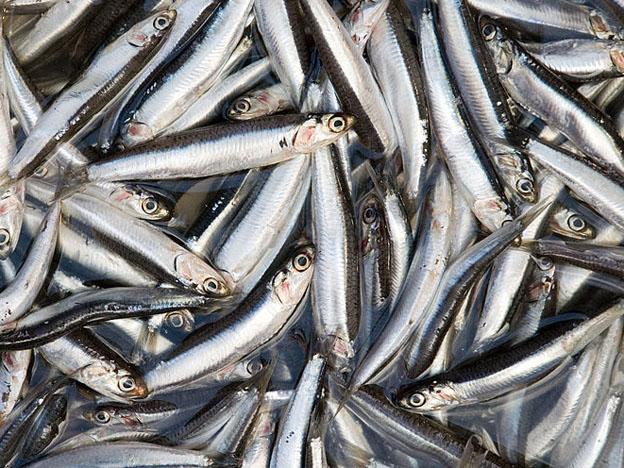
Let's look at it from the perspective of industry supply and demand. This fishmeal is part of the global animal protein supply chain, simply put, it's used as feed for fish. Of course, other animals can also eat it. The supply pattern of this fishmeal is quite extreme. Half of the global fishmeal supply is controlled by Peru, and we are the largest buyers of Peruvian fishmeal, with a very high proportion-over 60%, highly dependent with no substitutes available. The raw material for fishmeal is anchovies off the Peruvian coast, but the weather has changed. The El Niño phenomenon has disrupted the ocean's equilibrium, raising water temperatures and deteriorating the living environment for these fish.
So, in Peru, it's all about controlled fishing, closed seasons, stopping catches, and protecting fish stocks. When supply is highly concentrated, the supply can drop massively. You have to understand, anchovies aren't just something you can catch whenever you want-it completely depends on the ocean ecosystem. Without anchovies, fishmeal supply inevitably decreases. But here's the thing: the demand right now is holding strong. In high-end aquaculture feed, it's really hard to replace fishmeal with something like soybean meal on a large scale. And aquaculture is currently in the peak feeding season, so the core demand continues to support the market. On top of that, high-end pet food also uses fishmeal, especially premium cat and dog food, which keeps expanding. As for inventory, port stocks are also at long-term lows, so the buffer is very thin. Even a slight shortage makes traders reluctant to sell, and prices can rise easily.
So right now, the fishmeal situation totally depends on how long El Niño lasts and how much quota Peru issues-it's a very long cycle. Also, if prices keep rising, we have to consider how much downstream users can bear. Once prices go up too high, farmers will likely voluntarily reduce fishmeal in feeds, so demand could drop too. What we can see is that the effects of El Niño have already started, and looking ahead, the related agricultural sectors that get impacted will probably experience this repeatedly.
Fish meal prices in Peru, the world's biggest producer, have jumped to the highest in more than a decade amid low anchovy stocks off the country's coast, lifting feed costs for salmon and shrimp farmers.
Spot prices for prime fish meal were $3,500 a metric ton last week, climbing 66 percent from $2,108 a ton at the start of the year, according to data from Peru Broker SA. Falling output of fish oil and meal in Peru may create an "explosive" price situation, industry analyst Oil World said last month.
Peru is the biggest fish-meal producer, harvesting schools of anchovy that feed on plankton in the nutrient-rich Humboldt current flowing north along the west coast of South America. The country's oceanographic institute Imarpe said Oct. 27 that biomass in the southern fisheries zone was insufficient to recommend a fishing quota, and is conducting a survey through Nov. 20 to reassess the status of the anchovy population.
Fish meal is the most expensive since at least the end of 2000, when spot prices were $475 a ton, according to Peru Broker data covering the period.